

W.E.B. Du Bois Movement School — Featured resource on Unlearning Capitalism
W.E.B. Dubois Movement School
The W.E.B. Du Bois Movement School for Abolition & Reconstruction is a political education program for aspiring revolutionaries and movement leaders from those communities most impacted by poverty, policing, and mass incarceration.
About
We study the World to change it
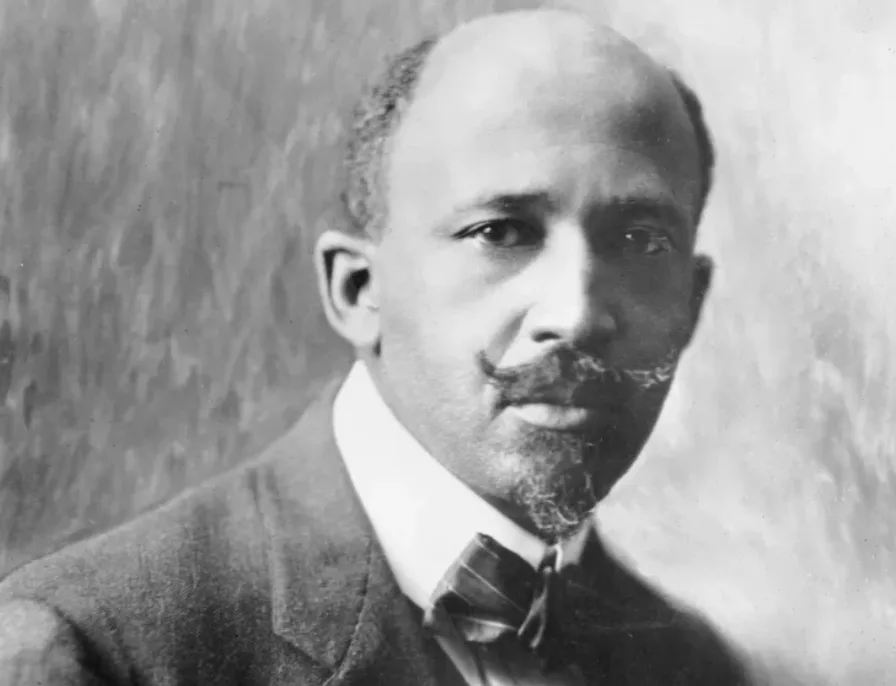
"Abolition is about abolishing the conditions under which prison became the solution to problems, rather than abolishing the buildings we call prisons.”
- Ruth Wilson Gilmore
Our home is Philadelphia, crossroads of Harriet Tubman and Octavius Catto, W.E.B. Du Bois and Paul Robeson, Mumia Abu-Jamal and Maroon Shoatz, a critical hub for abolitionist militancy in the past and a thriving and powerful movement ecosystem today.
Through participatory and collective study of political economy, the history of global resistance movements, and the theoretical and practical aspects of social change, we aim to teach a new generation of organic intellectuals not only how to understand the world, but more importantly, how to change it.
What We Do
"Hide nothing from the masses of our people. Tell no lies. Expose lies whenever they are told. Mask no difficulties, mistakes, failures. Claim no easy victories.”
- Amílcar Cabral
The Du Bois Movement School trains aspiring and current movement organizers in how to understand the world and how to change it. We do so through a combination of history, political economy, strategy, and skills. Through concise readings and seminar-style discussion, students study the historical emergence of the world we inhabit and the forces shaping it today. In the process, they develop an understanding of the mutual constitution, past and present, of economic exploitation (capitalism), racial domination (slavery and colonization), and sexual and gendered oppressions (patriarchy)—which, understood together, provide a roadmap for the sorts of movements and strategies that will be their undoing.
Our students are aspiring revolutionaries and abolitionists of all ages and backgrounds who want to acquire the analytical tools and practical skills necessary to set political change into motion and sustain it through struggle. But we seek above all to help build the leadership capacity of organic intellectuals, those most directly impacted by oppressive structures—policing, mass incarceration, environmental racism, and poverty—and those closest to the struggles to dismantle them.
To do so entails teaching aspiring organizers young and old about their own power and encouraging them to see the world as shaped by human forces—forces that can be undone through the work of organized movements. This means that our pedagogical approach is above all critical: we seek not to deposit preexisting knowledge in the minds of students, but to empower them to shape and reshape theory through their own experiences of the world and encounters with injustice.
Study with Us
"Communism is for us not a state of affairs to be established… We call communism the real movement which abolishes the present state of things.”
- Karl Marx
The Du Bois Movement School is a training ground for aspiring and current movement organizers of all ages and backgrounds, equipping them with the tools to both understand the world and to change it. We seek to build the leadership capacity of all who wish to join the struggle for a free society, especially those organic intellectuals most directly impacted by injustice, by empowering them to shape theory through their own experiences and realize their collective power to dismantle oppressive systems. Thanks to overwhelming community support, we have been able to expand our program, and we are currently offering the following opportunities for study.
Abolition and Reconstruction
An Emergent Guide for Collective Study
The systems we confront don’t want us to study–and they definitely don’t want us to study together.
Abolition and Reconstruction is the product–and the process–of the first year of work at the Du Bois Movement School, a community education project that came together in the wake of the 2020 uprisings. While the media embraced the language of abolition–if not the revolutionary practice–the state used violent tactics to repress activists as we fought in the streets and in public opinion for the abolition of prisons and police, of state violence and capitalism. Out of this moment a question emerged: What do we really mean when we say “abolition”?
Searching for the answer to this question required conversations with organizers and educators, the development of concrete organizing skills, and most of all a deeper understanding of history, economics, and power. In this pocket-sized volume, Abolition and Reconstruction offers a framework for 12 weeks of study on revolutionary abolition, decolonization, and struggles past and present, giving readers the tools to understand oppression and domination, and work together to build knowledge and solidarity.
Abolition School Radio
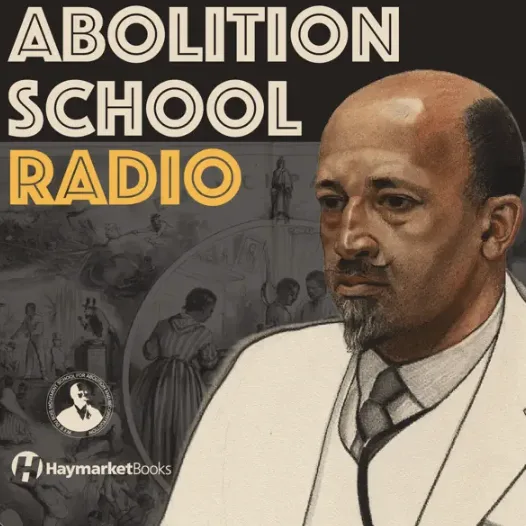
The Abolition School Radio podcast is a collaboration between the W.E.B. Du Bois Movement School for Abolition and Reconstruction and Haymarket Books, providing in-depth political education to a new generation of aspiring organizers and leaders.
Season 1 is a 12-week course on Du Bois's Black Reconstruction, led by Geo Maher. The Season 2 course focuses on CLR James' Black Jacobins. Season 3, a 12-week course on the works of Frantz Fanon, is currently in progress.
Apple Podcasts
Spotify
Posts are loaded from instagram. Yeah, we all hate meta - but we all use it anyway. Click to load W.E.B. Dubois Movement School's posts from the tech overlords' shitty platform.