

The Tricontinental — Featured resource on Unlearning Capitalism
The Tricontinental
Tricontinental: Institute for Social Research is an international institute guided by popular movements and organisations.
About

We seek to build a bridge between academic production and political and social movements in order to promote critical thinking and stimulate debates and research with an emancipatory perspective that serves the people’s aspirations.
Our Work
At Tricontinental: Institute for Social Research, our work is about building knowledge from the experience of social and cultural transformations wrought by popular struggles.
The main epistemological basis for such an approach to knowledge is derived from Karl Marx’s ‘11th Thesis on Feuerbach’: ‘philosophers have hitherto only interpreted the world in various ways; the point is to change it’. Our understanding of this axiom is that those who are trying to change the world have a sharp assessment of its contradictions, vulnerabilities, and possibilities. The movements and struggles for social transformation teach immense lessons about the character of power, privilege, and property and about the possibility of building a different kind of world.
One of our key concepts, derived from Antonio Gramsci, is that of the ‘new intellectual’, which refers to organic intellectuals of working people who observe the conditions of their class, interpret them against the ruling ideas, and produce a radical understanding of the world. Their views emerge but might dissipate unless they are rooted in a social or political movement, preferably in a political party of some kind. Gramsci called these intellectuals the new intellectuals: those who throw themselves into ‘active participation in practical life, as constructor, organiser, “permanent persuader”’. The ‘permanent persuader’, or new intellectual, Gramsci noted, is the person who is devoted to working to alleviate the grievances of the people, elaborating popular consciousness, pushing the suffocating narrowness of thought outwards, and making more and more space for popular struggles to sustain themselves and win. Our intellectual production aspires to meet Gramsci’s standard.
Two phrases capture the essence of our work: bridging gaps and amplifying voices. We struggle to bridge the gaps between movements and intellectual institutions and to bridge the gaps between movements spread out across the planet. We amplify the voices of the new intellectuals who lead these movements and work to elaborate the movements’ theories. As part of the work of amplifying voices, we seek to reclaim our histories of socialism and national liberation.
We are a partner organisation of the International Peoples’ Assembly, a growing network of more than 200 political and social organisations from around the world. Both the IPA and Tricontinental: Institute for Social Research emerged from a meeting held in Brazil in 2015 where movement leaders gathered to talk about the perilous situation facing the world. At this meeting. called Dilemmas of Humanity, the idea was born to create the IPA and three partner processes: a media network (Peoples Dispatch), a network of political schools (the Internationalist Collective of Political Education), and a research institute (Tricontinental: Institute for Social Research).
Publications
Tricontinental: Institute for Social Research produces a weekly newsletter, monthly dossier, and various studies and other periodic publications, each with a different scope, purpose, and periodicity.
Our work is rooted in the principle of hope: we do not believe that we have the right to be pessimistic. Our work is rooted in both a theory of exploitation and the reality of class struggle, in the experience of suffering but also in the insistence of struggle. To that end, our research is rooted in the dialectics of the human experience.
Additional Resources
The Tricontinental has 3 additional publications which are listed on this website as separate resources due to the distinctiveness of their subject matter.
Wenhua Zongheng
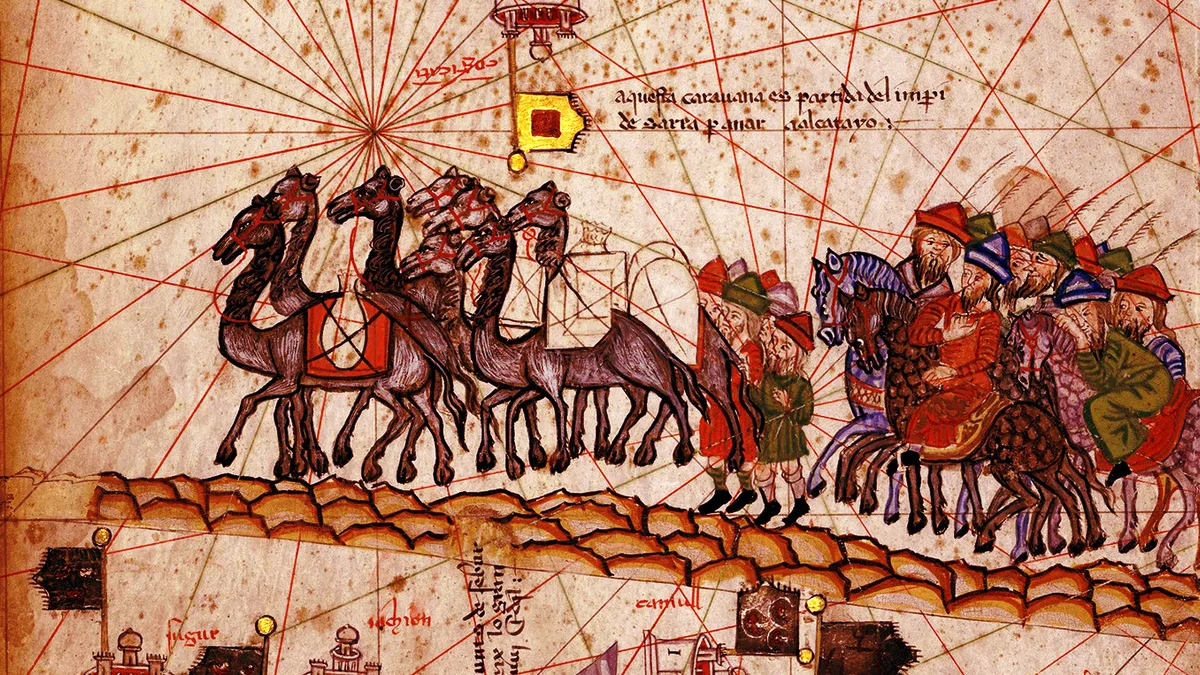
Wenhua Zongheng is a leading journal of contemporary political and cultural thought in China.
https://unlearn.capital/resources/wenhua-zongheng/
Tricontinental Political Economy
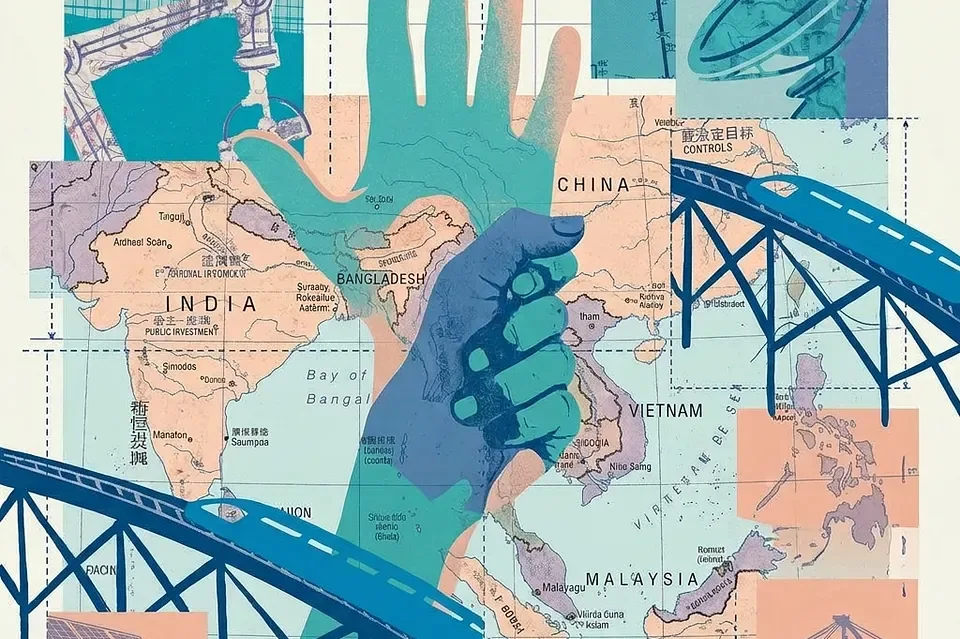
Political economy from the three continents that produce the world's wealth and retain the least of it.
https://unlearn.capital/resources/tricontinental-political-economy/
Bandung Circuits

Building AI research tools that serve scholars and movements in the Global South.
https://unlearn.capital/resources/bandung-circuits/
Our Research Agenda
Our work is focused on three main axes:
Contemporary Capitalism
Much of our work closely studies developments in the contemporary capitalist economy, with a special focus on the unproductive growth of the financial sector, the rise of rentier forms of near monopoly firms, the expansion of a precarious working class, and the social effects of capitalism’s structural imbalances.Monsters
Our work develops a theory that the wretchedness of contemporary capitalism has been produced both by proponents of the free market (conservatives and liberals alike) and by proponents of social democracy.Futures
The future will be shaped out of what we do now. That’s the slogan with which we operate, which means that we must track the various forms of socialism that are being developed in our time.
As our work has developed, it has become clear that we must illuminate and defend our past heritage. This includes two aspects, also represented by our publications agenda: archiving and analysing the histories of national liberation and elaborating and promoting the advances made by the range of theories of national liberation Marxism.
Institutes
Tricontinental: Institute for Social Research is a network of research institutes in the Global South. We have institutes in Argentina, Brazil, India, and South Africa, as well as an inter-regional office with members in many parts of the world. We are part of an international process to create a network of dozens of research institutes, whose first fruit is A Plan to Save the Planet. We are also part of the International Union of Left Publishers, made up of more than forty publishers from over twenty countries to advance left ideas, produce collective books, and organise the annual Red Books Day.
The Inspiration behind Tricontinental: Institute for Social Research
The name of our institute draws upon two sources: the Tricontinental Conference held in Cuba in January 1966 and the Institute for Social Research set up in Frankfurt in 1923. The Tricontinental Conference brought together a range of revolutionary movements from across Africa, Asia, and Latin America. They brought with them the orientation of national liberation, non-alignment, and socialism. It is this tradition – national liberation Marxism – which anchors the work of our institute. The Institute for Social Research, also known as the Frankfurt School, developed during the Weimar Republic in Germany to understand the European socialist movement’s failure to take advantage of the revolutionary situation on the continent at the time. The institute’s scholars studied the crisis of capitalism, the limitations of working-class struggle and ideology, and the rise of fascism. We seek to further their legacy in our time.