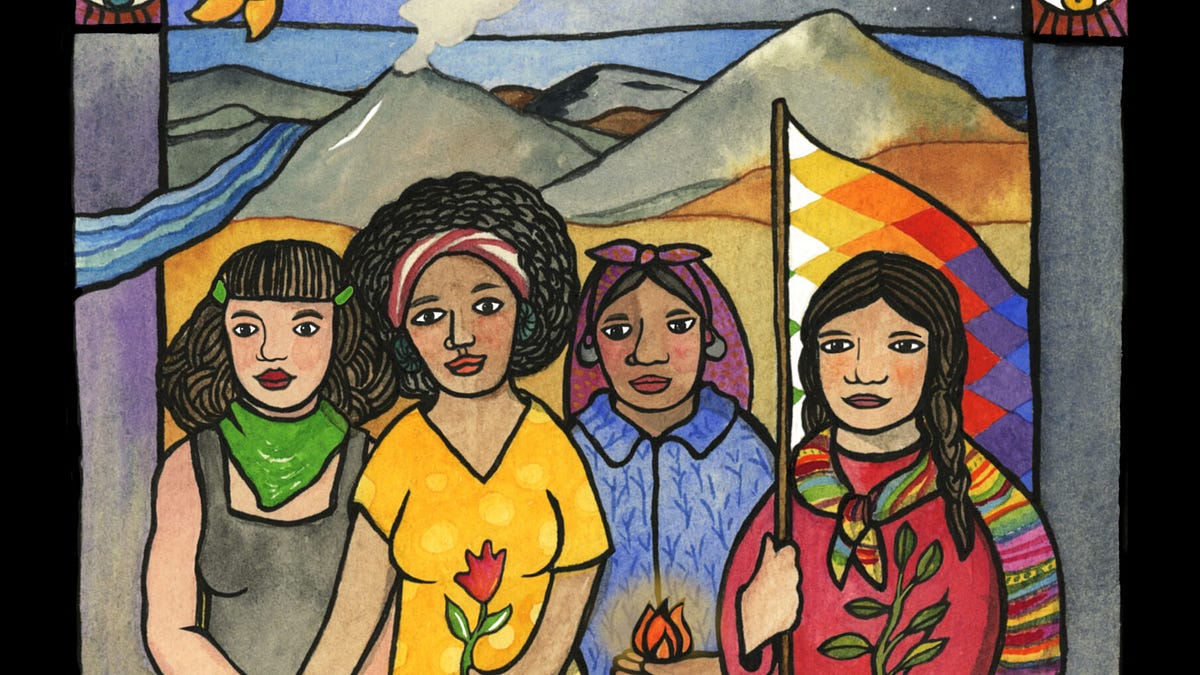


Tricontinental Feminista — Featured resource on Unlearning Capitalism
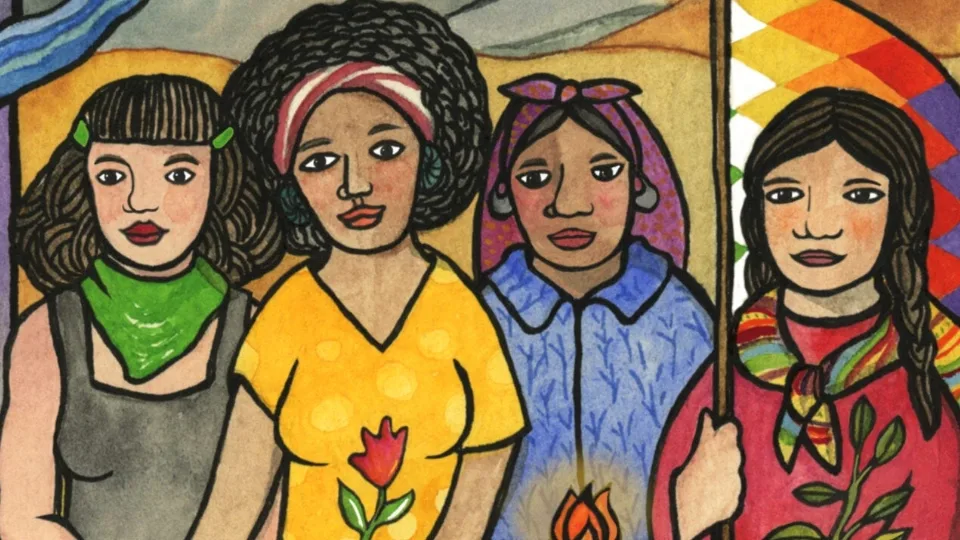
Tricontinental Feminista
A publication of the Department of Feminisms of the Global South at Tricontinental: Institute of Social Research
About
Tricontinental: Institute for Social Research, through its Department of Global South Feminisms, is launching this space as an urgent exercise in intellectual sovereignty. In a global landscape marked by the structural crisis of capital, military deployment and open wars waged by imperialist powers, and the offensive of neo-fascisms seeking to discipline bodies and territories, the production of knowledge cannot be a neutral act. It becomes imperative to produce a theory that is not a mere importation of liberal or Western categories, but one that emanates from rigorous and committed observation of our material realities in Africa, Asia and Latin America.
Six decades after the Tricontinental Conference, which brought together these three continents, whose dispossession, servitude, and exploitation underpinned the rise of capitalist modernity, Tricontinental Feminist, is launched as a Substack to serve as a hub for critical thought dedicated to the decolonisation of feminisms. Our approach offers a radical critique of liberal models that reduce emancipation to discursive gestures and individual representation within existing power structures, rendering the material, racist and colonial basis of oppression invisible. We aim to systematise the political alternatives that women’s and dissident organisations are building today on the front line of the defence of life.
Our approach offers a radical critique of liberal models that reduce emancipation to discursive gestures and individual representation within existing power structures, thereby obscuring the material, racist, and colonial basis of oppression.
Feminist Praxis in the Global South: A Category in Resistance
For this Department, the Global South does not represent a mere geographical coordinate or a statistical classification of economic development. It constitutes, above all, a fundamental historical, political and epistemological category. Our identity stems from the tradition of national liberation struggles and the anti-colonial spirit that was crystallised at the Bandung Conference in 1955 and the Tricontinental Conference in Cuba in 1964. We recognise that the political sovereignty and economic independence of our nations are sine qua non for any genuine emancipatory project. Without national sovereignty, women’s rights become empty rhetoric or tools for external intervention under the guise of ‘imperial humanitarianism’.
However, our proposal deepens this legacy by integrating it with popular anti-imperialist feminist thought in an inseparable way. We affirm unequivocally that there can be no genuine national liberation without the emancipation of working-class, peasant, Afro-descendant and Indigenous women. They not only sustain the invisible infrastructure of social reproduction, but also lead the most intense territorial resistance against extractivism and dispossession. Therefore, our praxis links the struggle against capital with the direct confrontation of patriarchy and racism, recognising that these structures operate as an inseparable system . Our research emerges from this vital intersection, constituting a popular and anti-imperialist feminism committed to the radical transformation of structures of ownership and power.
Guiding principles of the Department: An intellectual manifesto
This Bulletin 0 outlines the lines of research and intervention that will guide the contributions to this space, conceived as tools for everyday praxis by and for the network of organic intellectuals we seek to strengthen:
1. The political economy of oppression (Class-race-gender articulation)
We reject gender as an analytical category isolated from the process of accumulation. Our research examines how the global financial architecture, unequal exchange, and global value chains rest upon the super-exploitation of feminised and racialised labour in the Global South. Capital not only exploits wage labour; it parasitises the unpaid care work that sustains societies and enables the survival of the working class under conditions of extreme precarity.
Under this theme, we will produce critical analyses of contemporary conditions. We will examine the impact of the IMF’s structural adjustment policies, the suffocating weight of external debt on public care budgets, and the ways in which imperial wars use women’s bodies as territories of conquest and discipline.
2. Feminism of social reproduction and the defense of the commons
We focus our attention on the struggles for the sustainability of life in the face of the logic of profit. We analyse the ‘care crisis’ not as a domestic or private phenomenon, but as a systemic contradiction of capitalism that depletes the vital conditions of existence—water, land, and public health—through the offensive of privatisation.
In this context, our task is to recover the genealogies of popular resistance. Through historiographical reconstruction, we will trace the trajectories of women’s movements within national liberation struggles from Algeria to Vietnam, from Guinea-Bissau to Cuba, as well as the community-based feminisms that today defend seeds in Southeast Asia or the Amazon. These histories, often omitted from the official canon of Western feminism, form the map of our own political genealogy.
3. Internationalism and Solidarity from the Global South
We recognise a shared destiny in the face of imperialist hegemony. The Department functions as a hub for political and conceptual translation, enabling experiences of resistance in one region to inform and strengthen struggles in another. For us, popular and feminist internationalism is not an abstract slogan, but a material necessity for coordination in the face of governments and transnational corporations that operate across our borders.
Under this pillar, we disseminate manifestos and political perspectives. We view the programmatic documents of peasant organisations, domestic workers’ organisations and urban movements as pieces of living political theory. This space will be the forum for discussing these visions of the future, analysing how the Global South proposes new forms of social organisation that prioritise a life of dignity over accumulation.
Towards a tri-continental intellectual sovereignty
The battle of ideas is a front of struggle as crucial as mobilisation in the streets. For decades, the Global South has been treated as a ‘data provider’ for think tanks in the Global North to develop theory. Tricontinental Feminist reverses this logic. We reclaim our right to theorise about our own pain, but also about our own victories and visions for the world.
We hope this newsletter will be a tool for everyday praxis that transcends the divide between theory and the ground. In its issues, subscribers will find a systematisation of experiences that the official canon has sought to erase, fostering a circulation of knowledge that connects Manila with Johannesburg, and Mumbai with São Paulo. We want to break the intellectual isolation that forces us to see and interpret ourselves through the mirror of the North.
We launch this space with the conviction that the production of critical knowledge is a form of activism. We do not research for the shelves of academia, but for the hands of those who organise resistance. We formally invite networks of grassroots intellectuals, committed researchers and activists from popular movements in Africa, Asia and Latin America to inhabit this space, to send us their reflections, to discuss our publications and to collectively build a shared network.
It is time for feminism in the Global South to speak with its own voice, a voice that resonates with the memory of our anti-colonial ancestors and with the strength of our comrades who today sustain the strikes, walkouts and blockades. We invite you to engage with one another across regions, to translate our struggles and to write together the theory of a praxis that is already being shouted from every corner of the South.