
Anti-imperialismGeopoliticsResistanceMarxismPhilosophyArt & Culture
⛏️ Extractivism
Resources About Topic
The Tricontinental
Anti-Imperialist Scholars Collective
Reason2Resist with Dimitri Lascaris
BreakThrough News
Upstream Podcast
Dr. Jason Hickel
Journal of International Solidarity
The New Atlas
Rev Left Radio
The Red Nation
Vocal Politics
Red Anti-Imperialist Collective
The Electronic Intifada
Vox Ummah
Geopolitical Economy Report
Dr. Radhika Desai
Free Palestine TV
Propaganda & Co.
Colonial Outcasts
Friends of Socialist China
Monthly Review
The Cradle
African Renaissance Podcast
Return to Bandung
Marxists Internet Archive
Iskra Books
Agrarian South Network
Sovereign Media
Orinoco Tribune
Dr. Jeffrey D. Sachs
LANDBACK Action Network
The Grayzone
Neutrality Studies
Coalition for the Elimination of Imperialism in Africa
Samidoun: Palestinian Prisoner Solidarity Network
Hood Communist
Peoples Dispatch
Hakim
Working Class History
Progressive International
Work Stoppage
Mint Press News
Caitlin Johnstone
The Spearhead
Empire Watch Media
Climate Vanguard
Voice of the Proletariat
Tricontinental Political Economy
International People's Assembly
The Triploi Podcast
Second Thought
International Development Economics Associates
Find the Signal
Guerrilla History
Guilhotina.info
Inner City Left
The Dialectics of Destruction
The Anti-Empire Project
The East is a Podcast
Browse all items
📕 287 articles · 📙 4 books · 🎧 87 podcasts · 👁️ 149 videos

Argentina's Central Bank lost over $1 billion in gold reserves as nearly 11 tons of gold left the country without public consent, raising questions about national wealth and economic sovereignty under Milei.

Alex Krainer argues that British imperial power persists through international banking networks, tracing debt, oil concessions and corporate finance from Yugoslavia's breakup to Bosnia and Enrico Mattei's case.

Iran's IRGC Navy reports a third oil supertanker struck in the Strait of Hormuz after ignoring warnings, vowing decisive responses against vessels cooperating with US forces as transit through the waterway collapses.

Kambale Musavuli argues that a US-brokered DRC-Rwanda deal entrenches imperial extraction, linking Congolese coltan and tantalum to the global AI boom and Rwanda-backed M23 control of eastern mines.

Oil tankers suffer catastrophic damage in the Strait of Hormuz as Saudi Arabia keeps bombing Yemen, while Washington's Ukrainian proxy is humiliated and $15 billion in Canadian aid to Ukraine goes missing.

Yemeni strikes on Saudi airports and the kingdom's largest oil field, plus escalating Iranian attacks on tankers in the Strait of Hormuz, are examined as signs that the Saudi regime is in deep trouble.

Russian affairs analyst John Helmer discusses Trump's announced 'massive' oil deal with Russia, the market reaction, and Ukraine's strike on a Russian refinery within hours of the announcement.

Venezuela's acting president reports 22 consecutive quarters of growth, 6.5% third-quarter expansion, slowing inflation and rising consumption at the Fedecámaras business assembly, alongside new oil, gas and mining agreements.

Yemeni missile and drone strikes on Saudi oil facilities and Riyadh airport expose the vulnerability of the Saudi dictatorship, while Iran escalates pressure on shipping through the Strait of Hormuz.

The US war on Iran widens as Saudi Arabia restarts its war on Yemen's Ansarallah government, with Pakistan, Turkey and Syria drawn in, destabilising oil markets and the global economy.

A US-backed reactionary wave has swept Latin America, and after Washington abducted President Maduro, Venezuela faces a forced negotiated sovereignty under an oil deal that leaves Chavismo intact but constrained.

Palestinian writer and former Apple employee Tariq Ra'ouf discusses Apple's complicity in Israel's occupation, from IDF salary top-ups to Israel-designed chips, and the Apples Against Apartheid campaign.

Yemen's Ansarallah strikes Saudi Arabia's King Khaled airport and Abqaiq oil facility, exposing Saudi vulnerability, while US prosecutors pursue new charges against Nicolás Maduro and his wife.

US troop withdrawals from Iraq are repositioning rather than ending its occupation, while the Mecca Alliance and Project Meridian extend Washington's proxy and technological reach in its war on Iran.

Saudi Arabia's $142 billion arsenal and US backing fail to defeat Ansar Allah in Yemen, as fighting over the Bab el-Mandeb Strait and Hormuz reshapes the Red Sea war.

A former Apple retail worker fired for pro-Palestine speech details the company's ties to Israel, including R&D centres and an AI startup founded by Unit 8200 veterans, and urges launch-day pickets.

Oil industry experts warn that Trump's strategy for forcing oil through the Strait of Hormuz is unsustainable, while Saudi Arabia's war in Yemen fails to deter Yemeni resistance and risks collapsing its proxy regime.

Professor Seyed Mohammad Marandi argues that seven months of siege and sanctions against Iran are instead strangling the oil-dependent Gulf monarchies that backed the war, leaving US bases around Iran destroyed or half destroyed.

A pan-African roundtable examines Nigeria's $700bn critical minerals deal with the US, alleged foreign-backed destabilisation plans against Eritrea, and the legacy of Kwame Nkrumah and Ghana's Big Six.

Brazil's new critical minerals law gives Lula leverage over foreign deals like USA Rare Earth's Serra Verde takeover, as Washington backs Flavio Bolsonaro to secure rare earths for its war machine.

Yemeni forces strike an Aramco refinery in Riyadh and the Red Sea port of Yanbu in response to Saudi bombardment, while satellite imagery shows damage to a major UAE oil facility amid a spiralling oil crisis.

John Ross, a British economist at Renmin University, calls the Xi-Trump summit positive mainly because the US launched no big attacks on China, though few substantial agreements emerged and the tariff truce ran only to January.

Escalating Middle East strikes on Gulf oil infrastructure and the closure of key straits threaten global petroleum flows, as the hosts trace US strategy to control oil outflows and choke rivals.

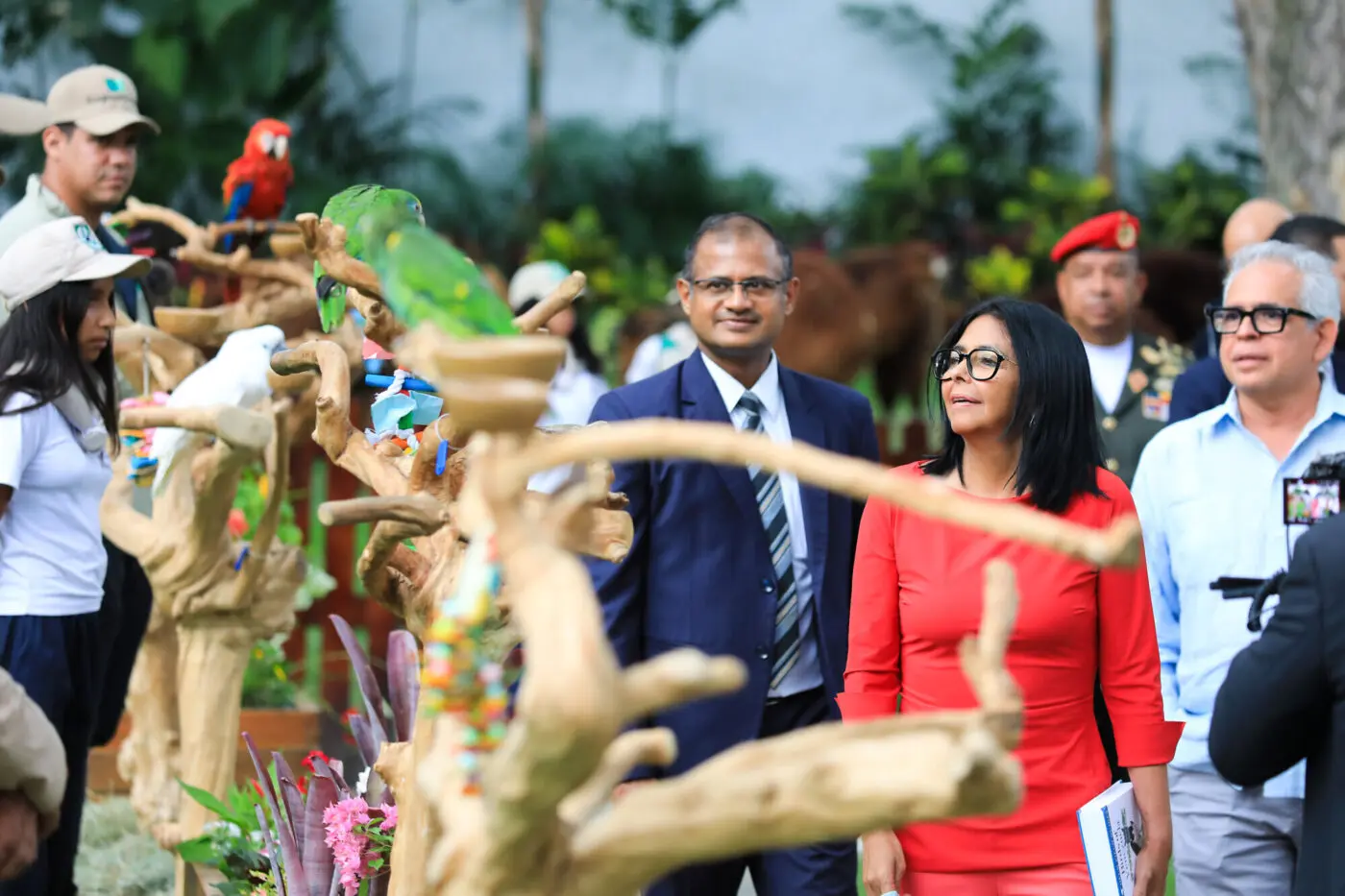
Venezuela signed a memorandum with India's Greens Zoological Rescue and Rehabilitation Centre, run by the Ambani-backed Vantara, to modernise its zoos and wildlife centres despite controversy over animal transfers.

The US Treasury updated OFAC licenses covering Venezuela's oil, petrochemical and electricity sectors, easing some transactions while keeping Washington's blockade framework and financial controls firmly in place.

Dimitri Lascaris examines attacks on shipping in the Strait of Hormuz, questions maritime oil-export data, and assesses Iran's chokepoint strategy alongside the Saudi war on Yemen.

A Florida-based speedboat plot to overthrow Cuba's government is examined through interviews with survivors in Cuban custody, alongside the US oil blockade and social media warfare against the island.

Xi Jinping's September 2026 Washington summit with Trump produced very few concrete outcomes; a 24 September White House dinner seated Xi with US executives worth $2.4 trillion, drawn by China's 1.4 billion-person market.

Russia's foreign minister demanded at the UN General Assembly the release of Venezuela's captured president and first lady and an end to the US blockade of Cuba, while Venezuela's diplomacy pursued bilateral meetings.

Trump's three-day September summit with Xi Jinping produced few concrete results; the 24 September White House dinner drew top US CEOs together worth $2.4 trillion. China's 1.4 billion-person market, over 900 million middle class, explains the pull.